Chapter 18 – Managing Performance

This chapter illustrates master performance management as a leadership skill and tells how to set goals, provide feedback on progress, and correct performance problems. Performance management is at the heart of leadership success and Important to have a vision, values, leadership qualities, and the power of leadership position.One-minute goal setting for performance planning: Involves identifying three to five goals that are critical to success and writing them on a single sheet of paper. Moreover, multi source evaluations can be useful for training, coaching, succession planning, and other talent management initiatives to improve performance.
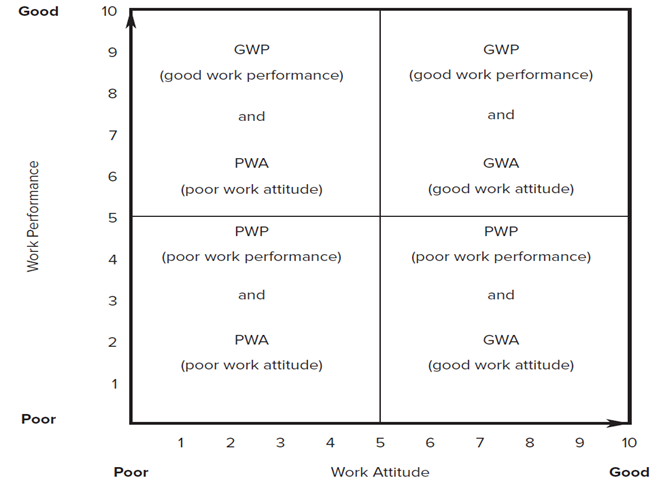


The y-axis of the graph is labeled work performance, and the x-axis is labeled work attitude. Both axes are marked from zero to ten. The beginning of both axes is marked poor, and the ends of both axes are marked good.
Chapter 17 – Helping People through Change and Burnout Prevention

the learning objectives will help to know how a leader can help people through change, including the importance of attitude and personal example, Identify where you are in the burnout process, including steps that can be taken for emergency, short-term, and long-term aid and identify the characteristics of a hardy personality.

Employees who remain in an organization after downsizing experience survivor syndrome •Being afraid they will be part of the next round of cuts •Feeling sadness and guilt over their co-workers’ fate •Often having more work to do personally if production demands do not reflect the reduced number of people to do the job.

Dictionary definition of burn out is to fail, wear out, or become exhausted due to excessive demands on one’s strength, resources, and energy. Burnout happens when a person experiences physical, psychological, and spiritual fatigue and is unable to cope. Result of burnout is that a company loses its best people at a critical point, or it leaves them so stressed that their attitude sabotages projects.


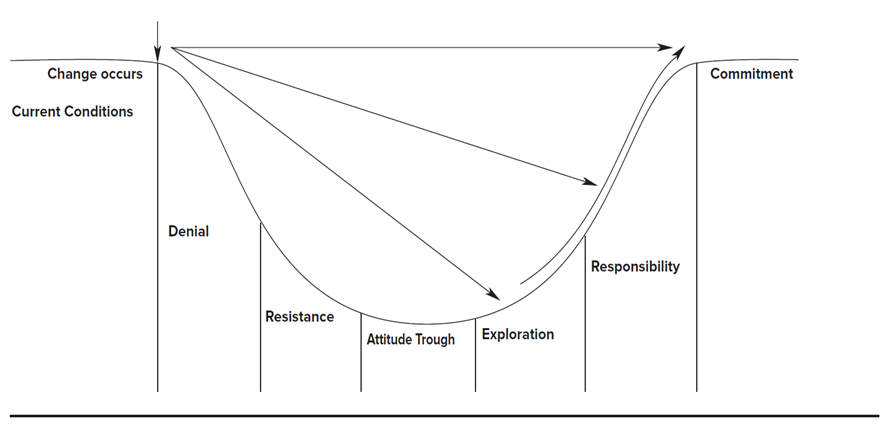
Effective Responses in Dealing with Change

Chapter 16 – The Leader as Coach

This chapter describes the role of the leader as coach and developer of people, know what employers want in an employee and know what employees want in a company. Many leaders view developing others as the most relevant and rewarding of all their tasks. Effective leaders recognize the importance of developing people and view developing others as an essential key to success.

Individuals who want to develop leadership effectiveness should identify superb leaders and learn from their example •Observe their behavior, and ask questions •Understand the values and goals of successful leaders and the rationale for their decisions and actions •Understand the principles underlying their skills and techniques and the resources they use to solve problems and make decisions

Many leaders have grown through the example, advice, and caring encouragement of direct-reports and peers.

•Reverse mentoring can be a powerful process for keeping leaders current in both the technical and human aspects of work

Targeted Training Need Types of Training Provided
Ensuring organizational performance Executive development Management training and development Supervisory training and development Staff or employee training
Meeting strategic goals Strategic planning Team building Employee orientation Quality improvement
Implementing new technology Technical training Scientific and engineering training Technician training Craft and apprentice training Employee skill training Data processing and computer training Information systems training

Chapter 5 – The Role of Personality

Stuff to learn in this chapter is deal effectively with different types of people and know the strengths and needs of your own personality, such as traditional, participate, and individualistic. Self-concept is the constellation of central ideas and attitudes a person has about herself or himself. People know their self-concept, dimly or clearly, and can usually justify why they do what they do in a word or phrase. Effective leaders understand their own personalities and the personalities of their subordinates. Different personalities have different needs and ways of behaving •Wise, caring, and effective leaders value the differences and strive to make the best use of the unique contributions of all types of people

•Traditional style: Exemplified by Moses, who is the foremost individual in Jewish history, and Queen Victoria, who is known for her moral strength and high standards of conduct

•Participative style: Exemplified by Eleanor Roosevelt, who was people-caring and people-serving, and Benjamin Franklin

•Individualistic style: Exemplified by Joan of Arc, who led the French people by her conviction and brave example, and Henry David Thoreau

Issue/Subject Traditional Participative Individualistic
Preferred social form Formal organization Group interaction Individualism
Leadership style Organizer, director Participative, inclusive Entrepreneurial, creative
Strategic emphasis Stability, standards Communication, teamwork Innovation, change
Behavioral norms Rules, policies, procedures Warmth, support Independent effort
Decision making Leader decides Group decides Individual decides
Core value Responsibility Love Freedom

Chapter 14 – Effective Delegation and How to Assign Work

Chapter 14 illustrates multiply personal effectiveness by delegating authority, understand the importance of person-position fit based on personality types and job families and know the types of skills needed at each level of management.Leaders enlist energies and improve their group’s success. Effective leaders use the ability to delegate to develop others and achieve more success than would otherwise be possible. Reasons failure to delegate should be corrected •Delegation gives leaders time to carry out duties in the areas of establishing direction, aligning resources, and energizing people •Delegation helps prepare employees for more difficult tasks and additional responsibility.Let employees know what decisions they have authority to make and delegating decision-making to the lowest possible level.


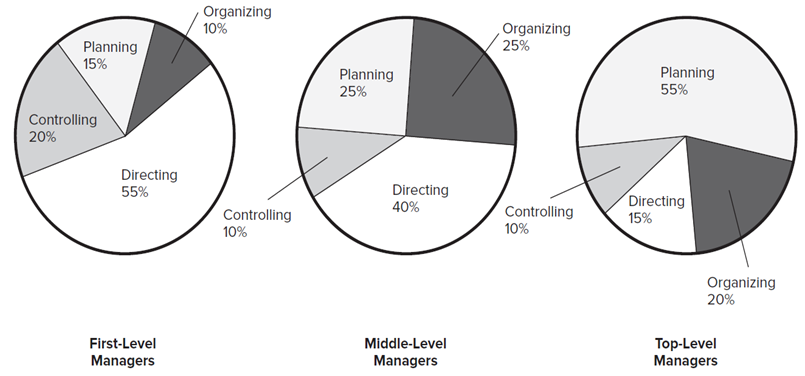
Normal Distribution of a Manager’s Time

Chapter 13 – The Diversity Challenge

This chapter illustrates why diversity is an important subject for leadership effectiveness and describe what the leader can do to achieve the benefits of diversity and avoid the pitfalls of prejudice.

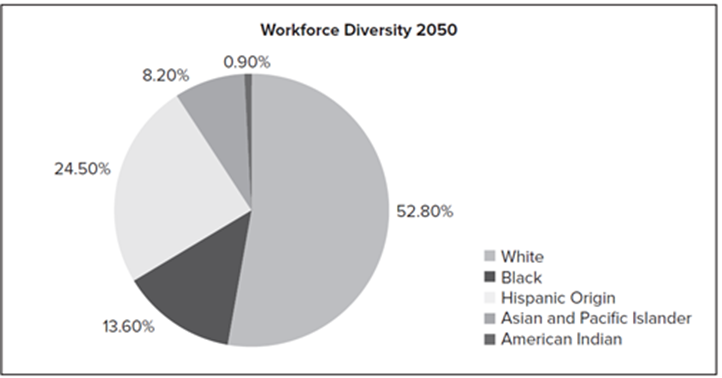
Diverse – Workforce in the United States is composed of more minorities, recent immigrants, and women than ever before. Currently, two-thirds of global migration is into the United States and One of the major changes in the workplace between now and 2050 will be the demographic picture of the labor force. Cross-cultural leaders must have cultural competency, which is an awareness of and a willingness to investigate the reasons people of another culture act as they do.

Leadership characteristics and the needs of followers vary across cultures •Areas include value-based leadership, team-oriented leadership, participative leadership, humane leadership, independent leadership, and self-protective leadership •Majority of the employees in the United States prefer the first four and oppose the last two characteristics of leadership


The Workforce in the United States Is More Diverse

Chapter 11 – The Team Concept

Learning objectives in this chapter are the characteristics of a high-performance group and demonstrate and reinforce positive versus negative group member roles. dealing with problem behavior and letting the person know that his or her behavior is unacceptable and will not be tolerated if he or she does not respond to one’s efforts. Globalization of organizations and the changing nature of work have created the need for cross-cultural and virtual teams. Effective teams generate creative solutions to business problems.


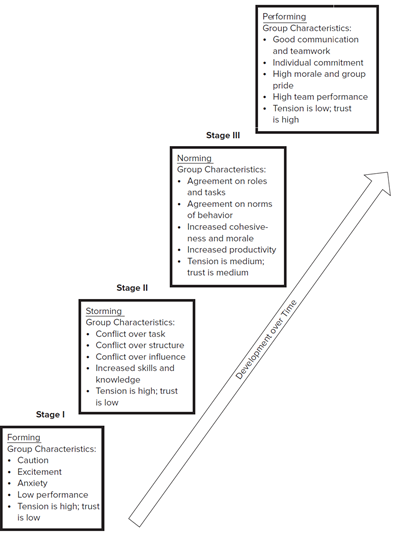
There are four boxes that represent the four stages in the life of a group. There is an arrow on the right side of these boxes that shows the transition from stage one to stage four, which reads development over time.

Chapter 10 – Effective Leadership and Human Relations

This chapter will help to apply the principles and practices of effective leadership and understand the importance of good human relations in the work setting. Acceptable drudgery quotient depends on the work ethic one has developed, Single best way to achieve high morale is to get the right person into the right job in the first place and Career counseling can help.

Areas that have positive effects on employee satisfaction and job performance

•Pay and reward systems

•Job autonomy and discretion

•Support services and training

•Organizational structure

•Technical and physical aspects Task assignments


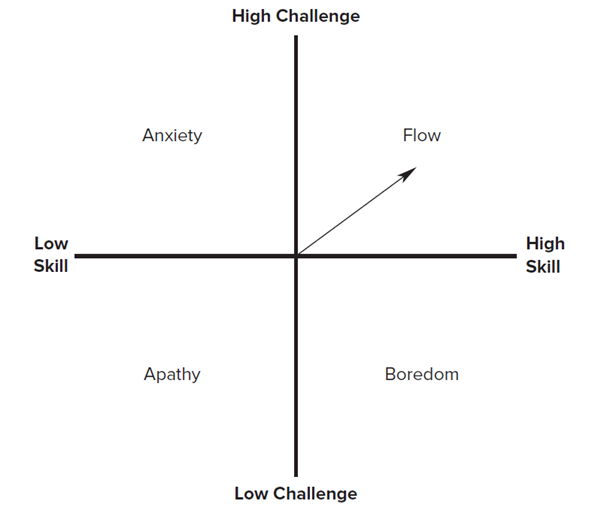
A vertical line and a horizontal line intersect at the center. The vertical axis is labeled high challenge at one end and low challenge at the other. The horizontal axis is labeled low skill at one end and high skill at the other.

Chapter 9 – Empowerment in the Workplace and the Quality Imperative

This chapter illustrates about practical steps a leader can take to empower others and develop a high-performance workplace and know the historical roots of the quality movement. The quality challenge is faced by most companies struggling to compete in a global marketplace. The quality challenge is faced by most companies struggling to compete in a global marketplace by consumers demand quality products and services and providing quality requires a talented, committed, and empowered workforce.


The Deming Chain Reaction


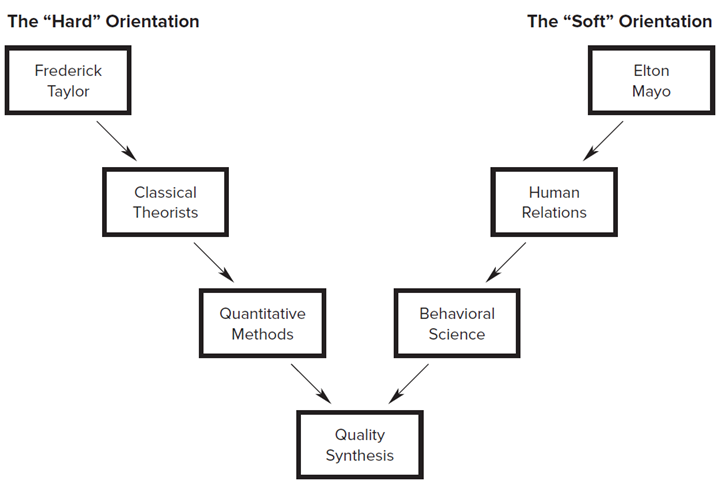
The figure is presented in the shape of a V with the hard orientation on the left arm of the V and the soft orientation on the right arm of the V