Chapter 8 – Leadership Authority

This chapter tells about the philosophy and practice of participative leadership, Communicate effectively for leadership power and understand leadership as a calling to serve. two type of leadership authorities are :

Top-down •Leadership authority is based on position in a social hierarchy •Power flows from the highest level to the lowest

Bottom-up •In an organizational pyramid, workers support managers and supervisors who in turn support executives •Pyramid serves as the basis of most classical organizational structures


The triangle has three levels. From the bottom, the labels are frontline workers, managers and supervisors, and top executives.
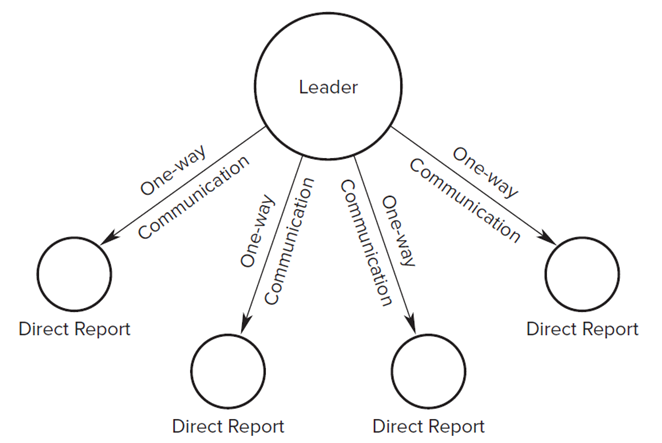

It has a circle on top labeled leader. From this circle, four arrows point to four smaller circles below. All the arrows are labeled one-way communication. All four circles are labeled direct report.
Chapter 7 – The Role of Values and Ethics at Work

This chapter illustrates why leadership by values is important, Understand the role of courage in character formation and know the role of the leader in setting the moral tone and ethical climate of the workplace. importance of values are organization must have a sound set of values on which it premises all policies and actions to survive and achieve success. people define characteristics in different ways what they say is important, what they do is more important and what they sacrifice for is the most important. Character is based on a value system that is known, cherished, stated, lived, and lived habitually. there are 5 compromising points are Know one’s values, Cherish one’s values, Declare one’s values, Act on one’s values and Act habitually on one’s values. Organizations are creating the role of an ethics ombudsman to monitor ethical practices and procedures. Communicating ethical standards, Designing systems to monitor employee’s adherence to the standards, Teaching managers and employees how to respond to ethical dilemmas.


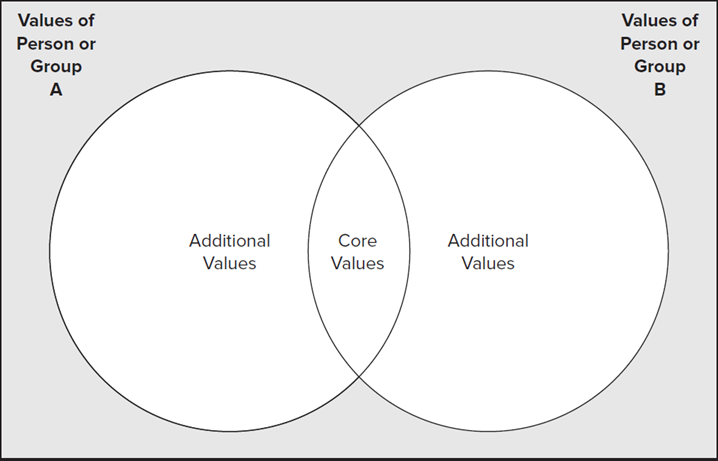
It is presented in the form of a rectangular box. The top-left corner is labeled values of person or group A. The top-right corner is labeled values of person or group B.

Chapter 6 – Leadership Ethics

This clarifies the importance of ethics at work and identify the levels and stages of moral development. Heifetz’s theory: Leadership involves the use of authority to help followers uphold values in the workplace. Burns’s theory: Transformational leadership emphasizes the moral development of followers and maintenance of high standards of ethical conduct. Greenleaf’s approach: Leadership has strong ethical overtones, with the premise that true leadership is service to others. Thomas Aquinas, a Christian philosopher, taught that all people are endowed with the desire to be good. This inclination can be dormant or perverted, but it is present in all people and is impossible to destroy. Aquinas believe that to resist God is contrary to human nature and if we follow God we will fulfill our nature and be good. We will be moral and experience the greatest meaning of which we are capable.

Chapter 5 – Organisational climate

This chapter explains the impact of organisational culture and organizational climate that attracts and keeps good people This chapter explains the impact of organisational culture and describe an organizational climate that attracts and keeps good people. Psychologically healthy work environment brings out the best in employee and organizational well-being. Organizations are composed of interdependent groups. Success depends on the conditions in each subgroup and every unit should develop an enlightened and supportive climate. Likert describes a organization as work groups with a high degree of loyalty and favorable attitudes. Moreover, Treat every individual with understanding, dignity, warmth, and support and set high performance goals at every level of the organization. Culture is an important factor when organizations merge.


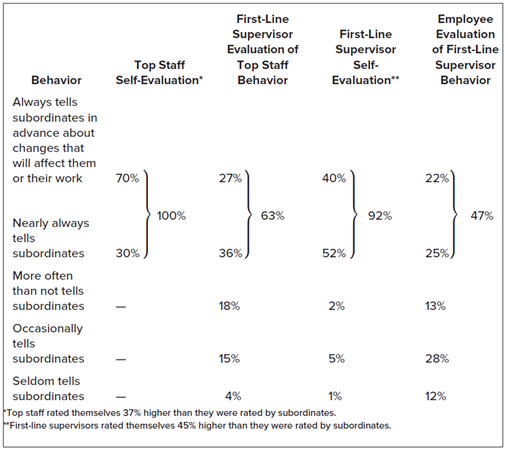
Extent to Which Leaders and Followers
Agree on Organizational Conditions, Appendix

Chapter 4 – The Importance of Vision and the Motive to Lead

When a leader wants to make a difference and strives to create a thing that never was before he begins with vision. leaders must have intensity, stamina, energy, and vitality moreover should have deep convictions and passion. social motives needed to lead

Power: Desire to influence, give orders, and carry them out •Achievement: Need to create and build something of value •Affiliation: Interest in helping others

SWOT analysis

Chapter 3 – Leadership Qualities,Characteristics of Followers,and Situational Factors

This chapter illustrates 10 qualities that distinguish leaders and Know how susceptible you are to leadership influence. Gives the leader inner strength to overcome difficult tasks. Drive and determination to stick with difficult tasks until they are completed.Leaders need strength and stamina to achieve goals. Narcissism is a particularly destructive leadership quality that boast about how great they are, while customers and co-workers know there is little truth behind the gloating. Derailed leaders are smart and ambitious and have good technical expertise moreover, leaders exhibit one or more behavioral patterns not evident in leaders who succeed. beside this, Crystallized intelligence represents one’s lifetime of intellectual attainments, as shown by vocabulary, accumulated facts about the world, and ability to solve problems within one’s area of expertise


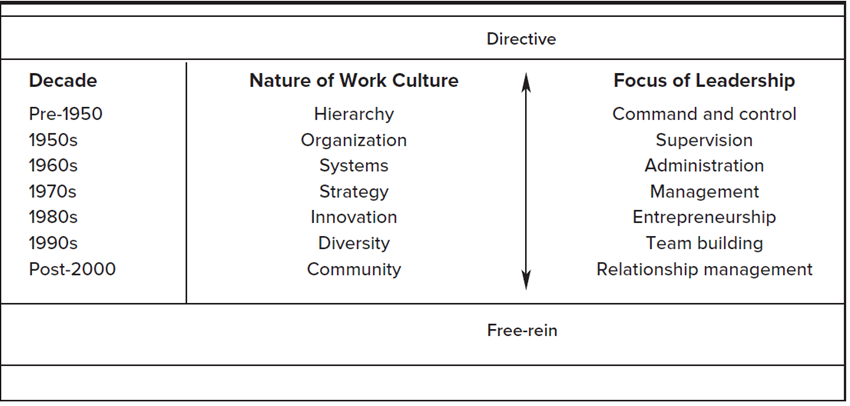
The Changing Character of Work Culture and
Changing Focus of Effective Leadership

Chapter 2 – The leadership equation

Early studies of leadership were based on two different theories: trait theory and behavior theory. in 1930’s assistants were trained in three styles autocratic, democratic and Laissez-faire. Leadership results when the ideas and deeds of the leader match the needs and expectations of the follower in a particular situation. Charisma: Extraordinary ability to inspire others and bring forth loyalty. Charismatic leaders exhibit a combination of personal characteristics and types of behavior. Use of optimism, charm, intelligence, and other personal qualities to raise aspirations and transform individuals and organizations into new levels of high performance


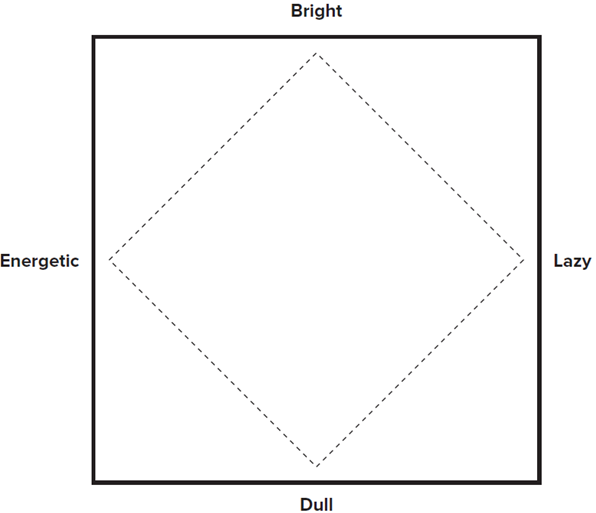
Within the square is a diamond-shaped figure, which is drawn using dotted lines. The diamond is positioned in such a way that each point of the diamond is almost touching the center of each side of the square. Outside the square, on each side, each point of the diamond is labeled. In a clockwise direction, the first label is bright, the second is lazy, the third is dull, and the fourth is energetic.

chapter 1 – The Importance of Leadership: Setting the Stage

This chapter reflects basics needs which should be in a leader. It defines where leaders learn to lead and what people want in a leader This chapter reflects basics needs which should be in a leader, the satisfactions and frustrations of leadership and difference between leadership and management. leadership is social influence and initiating and guide other to bring change in the organisation along with them. now comes what do people want in leaders? people want integrity, job knowledge and person- building skills. Management author John Kotter says that too many organizations are over managed and under led. Although they involve different functions, the terms management and leadership are often used interchangeably.

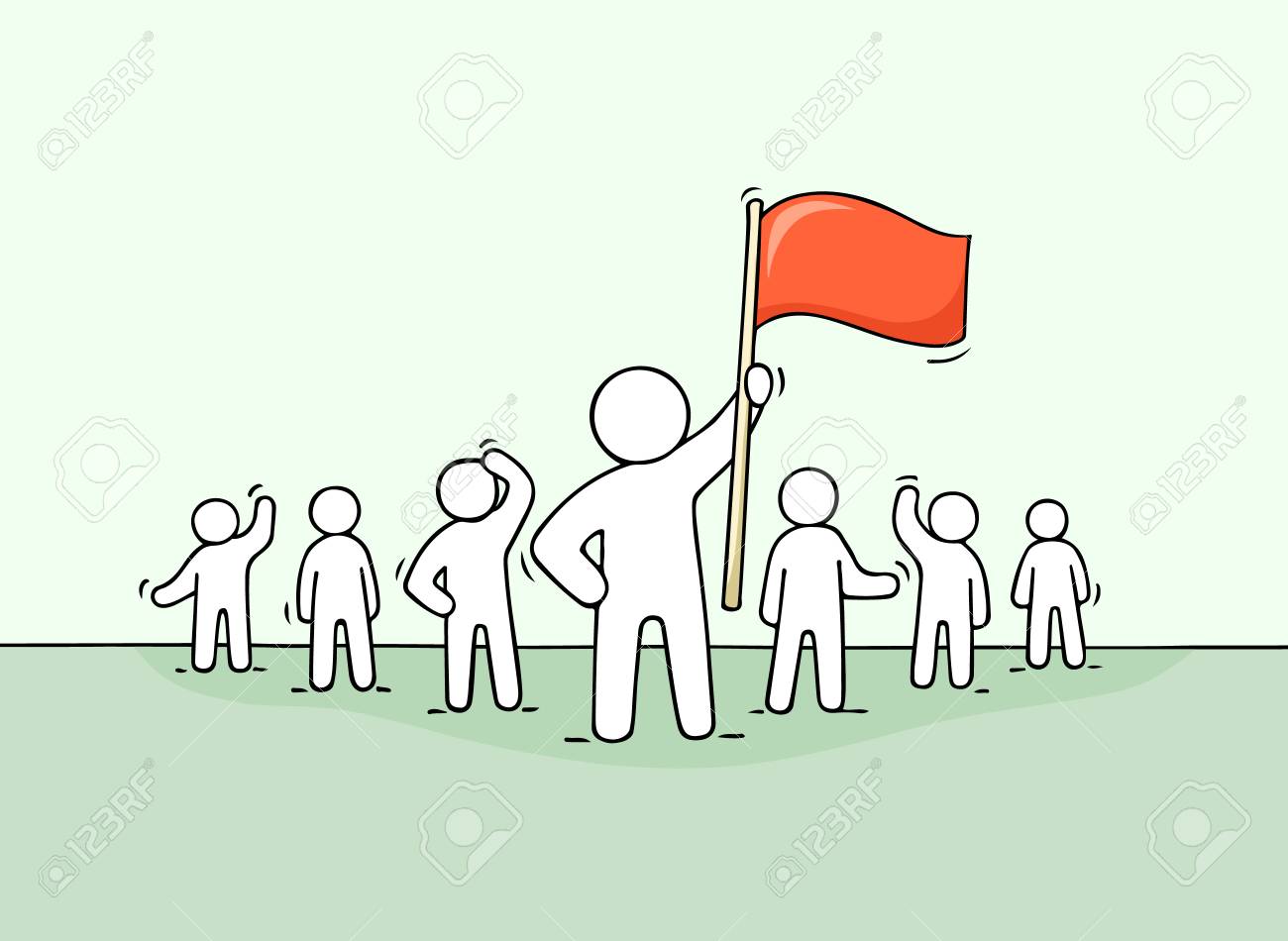
Sketch of working little people and leader with flag. Doodle cute concept about teamwork about leadership. Hand drawn cartoon vector illustration for business design.

Reflection Blog# 2

Personal leadership style

Personal leadership is the self-leadership. It defines one’s personality and reflects the life of the person. When a person practices personal leadership, it should lead from inside out. Person have to apply all the leadership principle to his roles and his life. It doesn’t mean that it will bring some profit to the business but I means that it bring out better in you and make you a best leader.

Some of my leadership qualities are: –

Strengths

Good communicator: – when there is any problem with our team members. Mostly, I use to make decisions and solve out the problem between them. I also lead to go and communicate to our instructors or the boss to make requests.

Commitment and passion: – It is important to be passionate along with team members. If I make idea I also help them as a team member and show my passion towards the assignments and the plans we made to make it.

Improvements

Accountability: – I need to be accountable to my team members as I help them but leave some of my work in between as I get fed off very fast.

Decisiveness: – Its leaders responsibility to take risk first then employees but as I saw in me I want my friends to be with me and help me and stand along with me. As I sometimes depend on my friends or colleagues.

Film study

After deconstructing the film it tells about scientific principles of Taylor

It tells about how to eliminate the wastage, harmonise different factors and processes.

Its principles are: –

  • Rule of thumb
  • Division of labor
  • Hierarchy
  • Selection, training and compensation
  • Time and motion studies